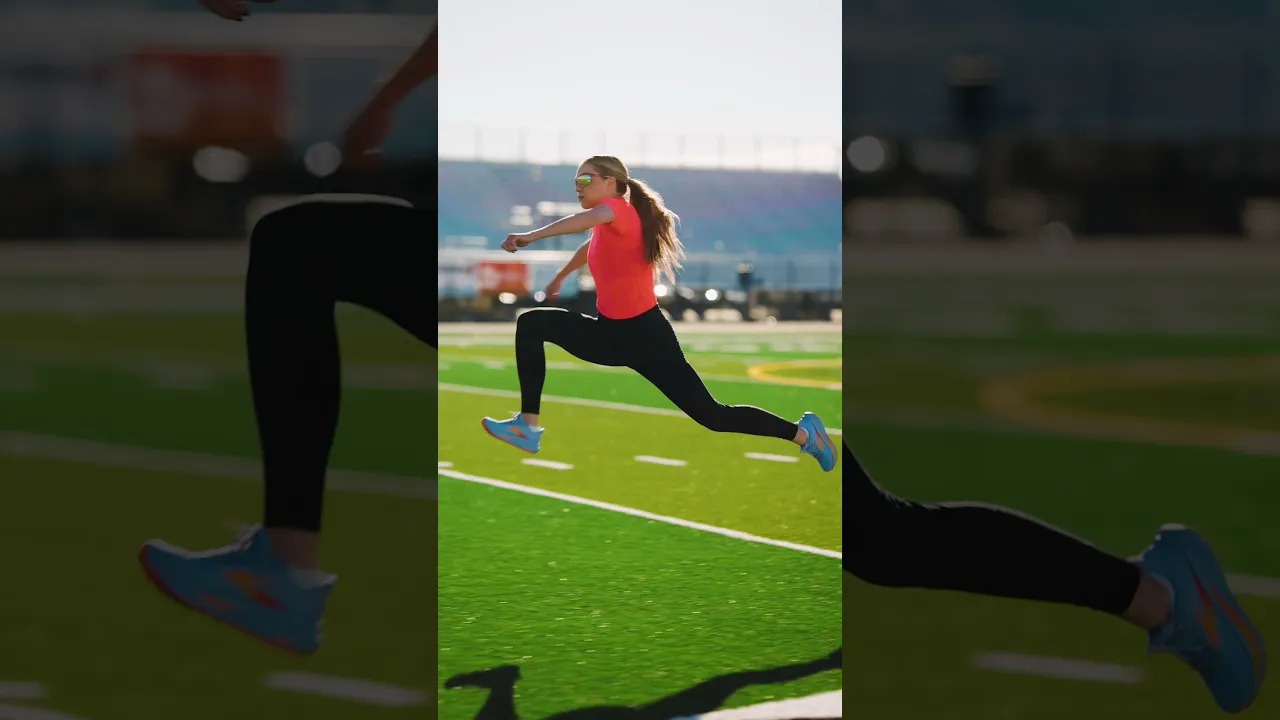
Improve Your Bounding Form 🏃♀️
 Chari Hawkins
Jun 9, 2026 13:00
Create an account to hide videos, mark them watched, or save them to Don't Miss.
Create an account to hide videos, mark them watched, or save them to Don't Miss.
Create an account to hide videos, mark them watched, or save them to Don't Miss.
Bounding is one of the most powerful dynamic drills in track and field. It bridges the gap between raw strength and explosive sprint speed, helping athletes improve stride length, horizontal force production, and ground contact efficiency.
Mastering proper bounding form requires a combination of rhythm, posture, and coordination. Below is a breakdown of the key elements of proper bounding form.
1. Posture and Body Alignment
Stay Tall: Keep your torso upright with a very slight forward lean from the ankles, not the waist. Avoid slumping forward or leaning too far back, which cuts off your power.
Core Engagement: Keep your core tight to prevent your hips from rocking or dipping upon landing. A stable torso allows force to transfer efficiently into the track.
Head Position: Keep your eyes up and focused straight down the track. Looking down at your feet alters your spinal alignment and drops your posture.
2. The Lower Body Cycle
Bounding is essentially an exaggerated, powerful running stride where you maximize air time.
Explosive Knee Drive: Drive your lead knee up aggressively until your thigh is roughly parallel to the ground. This mimics a strong "knees up" sprint position.
Splay the Leg: Extend your lead lower leg out slightly as you reach the peak of your bound, preparing to grab the track.
Under-Hips Ground Contact: Avoid reaching too far forward (overstriding), which creates a braking effect. Instead, actively strike down and back so your foot lands directly underneath your center of mass.
Powerful Push-Off: The trailing leg must fully extend through the ankle, knee, and hip (triple extension) to propel you horizontally forward, rather than just bouncing up into the air.
3. Arm Action
Your arms provide balance, rhythm, and counter-force to your powerful leg drives.
Oppositional Rhythm: Your arms must move in a synchronized, aggressive counter-movement to your legs (e.g., left arm forward as the right knee drives up).
Wide, Powerful Arcs: Drive your elbows back forcefully. The arm swing should be slightly more exaggerated than in standard sprinting to match the longer air time of the bound.
Relaxed Hands: Keep your shoulders down and your hands relaxed to avoid tension, which slows down your turnover.
💡 Pro-Tip for Bounding Success
Think of bounding as horizontal propulsion, not vertical jumping. Your goal is to cover as much distance down the track as possible with a snappy, bouncy rhythm. Avoid collapsing at the knees when you land; keep your ankles stiff and "pop" directly off the track.
@brooksrunning #letsrunthere #brookspartner
Entertainment