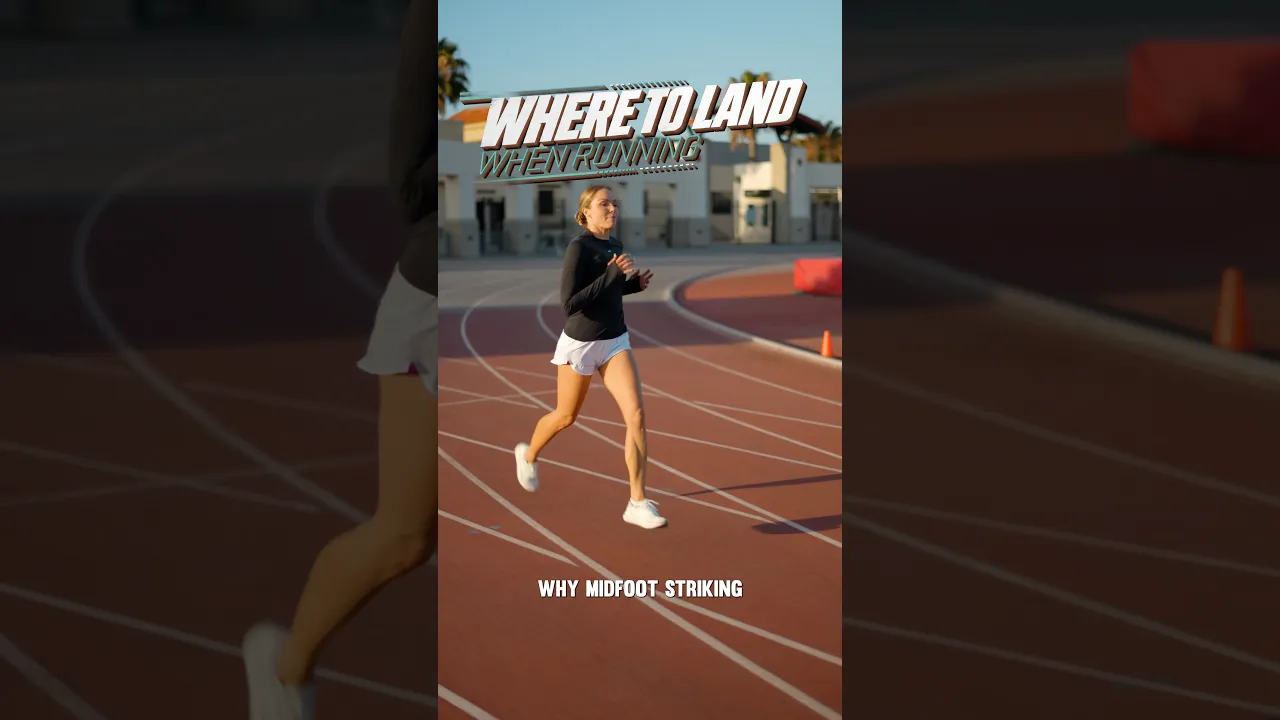
How to find the running "sweet spot" 🏃♀️✨
 Chari Hawkins
Jul 3, 2026 13:00
Create an account to hide videos, mark them watched, or save them to Don't Miss.
Create an account to hide videos, mark them watched, or save them to Don't Miss.
Create an account to hide videos, mark them watched, or save them to Don't Miss.
Midfoot strike is widely considered the most efficient and safest landing pattern for most runners.
How your foot hits the ground changes how shock travels up your leg. A midfoot strike hits the sweet spot between performance and injury prevention.
The Big Three: How They Compare
To understand why midfoot is so highly regarded, it helps to look at the three main ways runners land:
Heel Striking: Landing on the back of the foot. It acts like a micro-brake with every stride, sending a sharp shock wave straight up your shins, knees, and hips. It is often tied to overstriding (reaching too far forward).
Midfoot Striking: Landing flatly with your weight balanced across the center of your foot, right under your center of mass.
Forefoot Striking: Landing on the balls of your feet or toes (common in sprinting). While fast, it forces your calves and Achilles tendons to absorb massive amounts of load, which can lead to early fatigue or strain over long distances.
Why Midfoot Works So Well
Landing on your midfoot offers a couple of major physiological advantages:
Natural Shock Absorption: It allows your foot’s natural arch to flatten slightly and absorb impact, while your Achilles tendon and calf muscles act like springs, storing and releasing energy efficiently.
Reduced Joint Stress: Because you are landing with your foot directly underneath you rather than out in front, it significantly reduces the shearing stress on your knees and hips.
Better Cadence: It naturally encourages a higher step rate (cadence) and better running posture, keeping your momentum moving forward instead of bouncing up and down.
The Golden Rule: If you currently heel strike or forefoot strike and do not have any pain, shin splints, or knee issues, you don't necessarily need to force a change. Your body has likely adapted to your current gait.
However, if you are battling chronic knee pain or looking to improve your efficiency, working on a midfoot land via form drills (like high knees or gentle barefoot running on grass) is a great transition to make.
@brooksrunning #letsrunthere #brookspartner
Entertainment