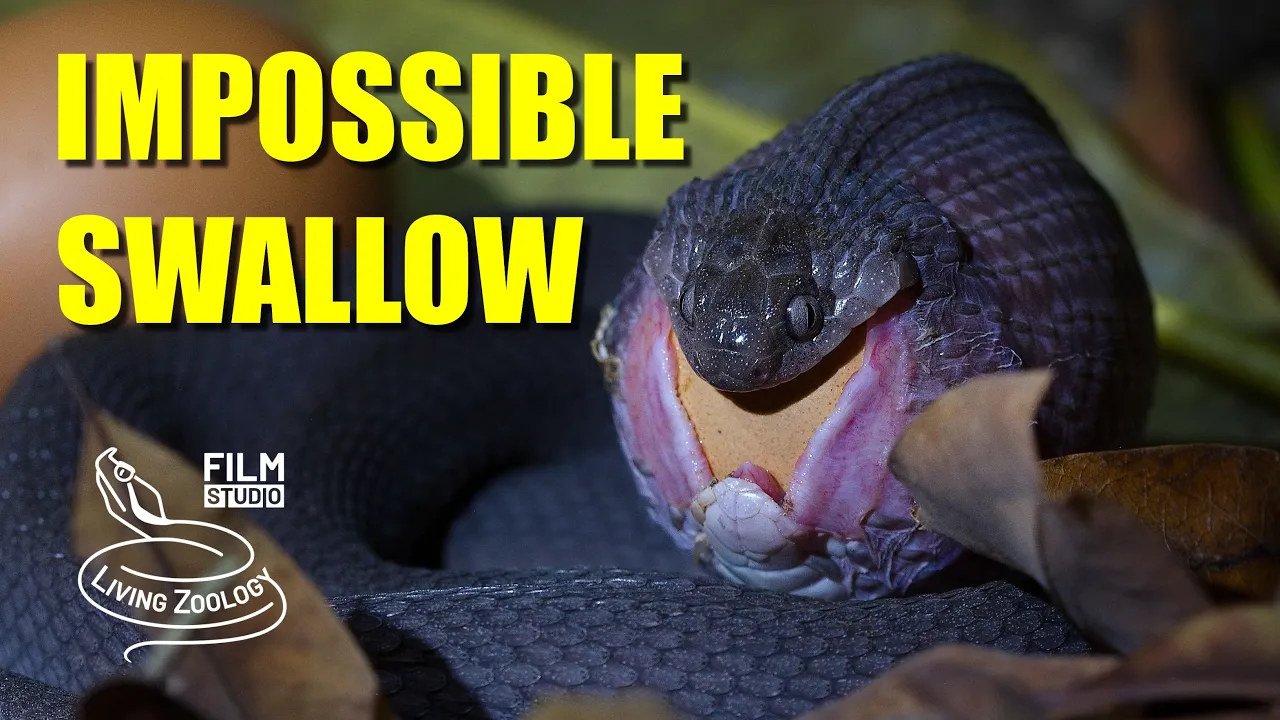
Snake Eats Something 4x Its Head!
 Living Zoology
Sep 21, 2026 13:00
Create an account to hide videos, mark them watched, or save them to Don't Miss.
Create an account to hide videos, mark them watched, or save them to Don't Miss.
Create an account to hide videos, mark them watched, or save them to Don't Miss.
Chapters
Imagine trying to swallow an object two to four times larger than your own head. Whole. Without using hands, arms, or even teeth.
In this episode of Living Zoology, we dive deep into the fascinating world of egg-eaters (genus Dasypeltis) to explore one of nature's most extreme and elegant dietary specializations. From toothless jaws and advanced chemical sensing to internal spinal "saws" (hypapophyses), these snakes have completely re-engineered their anatomy to exploit a passive but structurally rigid food source: bird eggs.
We also trace their unexpected evolutionary family tree, revealing a shocking truth. Did you know the closest living relatives to these completely harmless, toothless specialists are rear-fanged and can grow over 2 meters (6.5 feet) in length?
Chapters:
If you love high-quality documentaries about snakes, make sure to like, subscribe, and leave a comment below!
🌿 Support Living Zoology:
Become a channel member! https://www.youtube.com/c/LivingZoology/membership
Visit our official website: https://livingzoology.com/
Follow our field updates on Facebook: https://www.facebook.com/LivingZoology/
#Snakes #WildlifeDocumentary #EggEatingSnake #LivingZoology #Herpetology #Evolution #nature
Snake skull depiction was modified using the original art created by Michigan Science Art.
Pets & Animals
#egg eating snake
#dasypeltis
#egg-eater snake
#snake eating egg
#living zoology
#snake documentary
#herpetology
#snake anatomy
#cranial kinesis
#hypapophyses
#how snakes eat eggs
#toothless snake
#rhombic egg eater
#blanding's cat snake
#toxicodryas
#boiga
#indian egg eater
#elachistodon westermanni
#convergent evolution
#saw-scaled viper mimicry
#snake scale rubbing
#how do snakes breathe while eating
#glottis snake
#reptile evolution
#african egg eating snake feeding