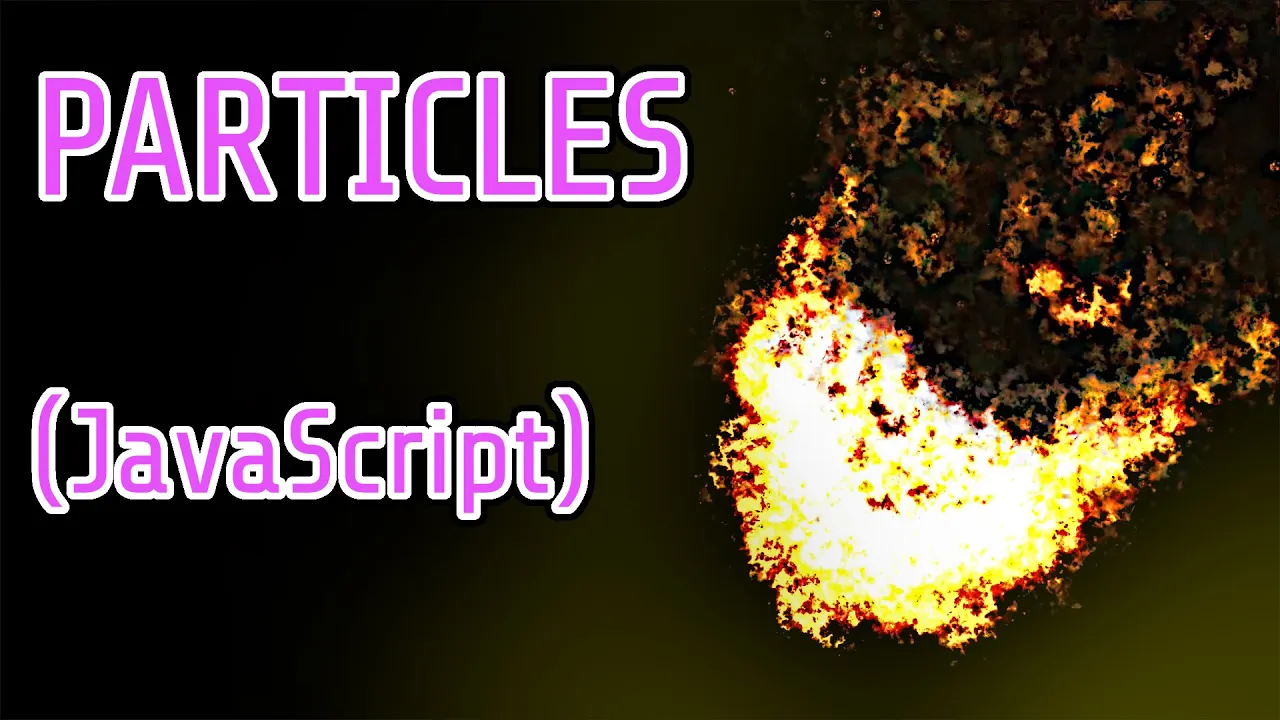
Writing a Particle System (using Three.js)
 SimonDev
Aug 4, 2020 10:00
Create an account to hide videos, mark them watched, or save them to Don't Miss.
Create an account to hide videos, mark them watched, or save them to Don't Miss.
Create an account to hide videos, mark them watched, or save them to Don't Miss.
Follow me on:
Patreon: https://www.patreon.com/simondevyt
Twitter: https://twitter.com/iced_coffee_dev
Instagram: https://www.instagram.com/beer_and_code/
Github: https://github.com/simondevyoutube/
In this project we'll be using Three.js to write our own particle system from scratch. I'll step through the basics of getting some simple particles on screen, before moving on to animating parameters over particle lifetimes and building out an example system. The point here is to give you an understanding of the basic building blocks, so that you can use that to build out a more complex system.
What we'll cover:
* Writing a basic particle system in three.js
* Getting simple particles on the screen
* Alpha / additive blending
* More complex parameter animation.
Just treat this as a jumping off point for your own 3d projects, there's lots of ways you can go with this but it often helps to have a basic project you can build from.
I will be following up this project with one that goes into detail on combining additive and alpha blending, to get that integrated smoky/fiery effect, stay tuned.
Full source code for the project is available, so if you're interested in fiddling with the code, screwing around with it, or improving it.
Source: https://github.com/simondevyoutube/ThreeJS_Tutorial_ParticleSystems
Science & Technology
#simondev
#game development
#programming tutorial
#three js
#three js tutorial
#writing particle system
#particle system
#webgl
#webgl tutorial