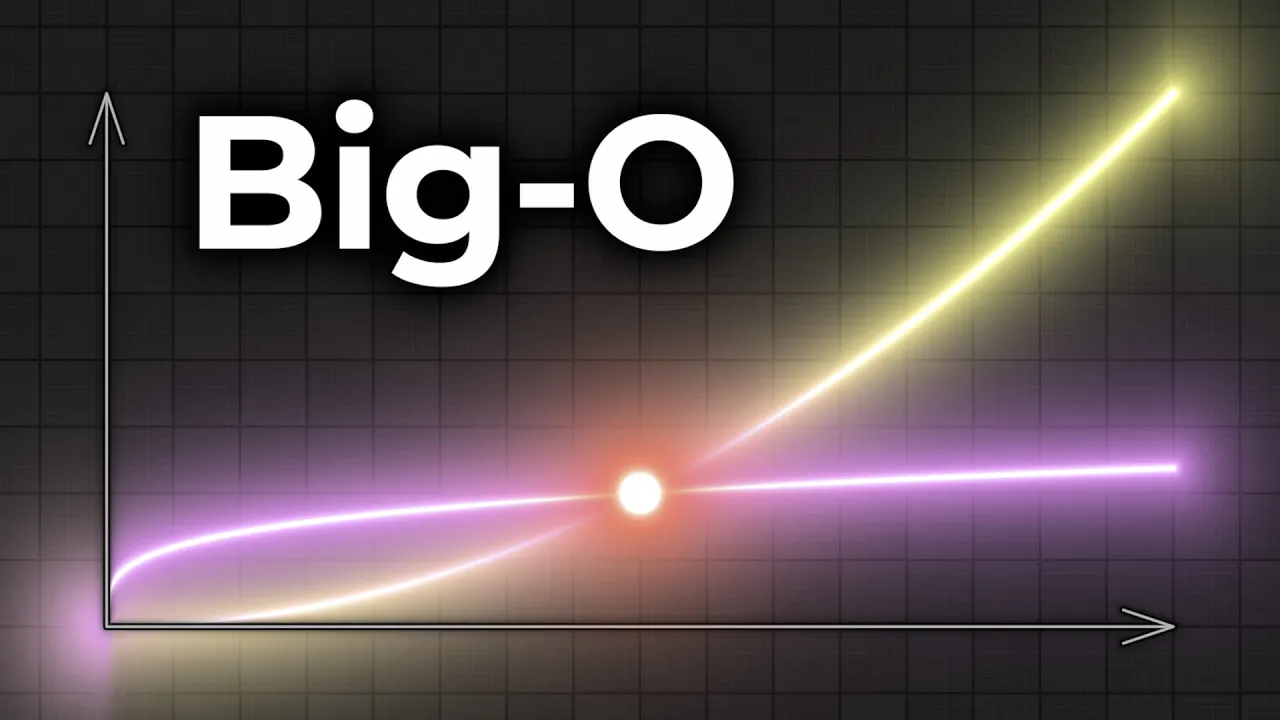
What Big-O notation ACTUALLY tells you, and how I almost failed my Google Interview
 SimonDev
May 18, 2021 11:00
Create an account to hide videos, mark them watched, or save them to Don't Miss.
Create an account to hide videos, mark them watched, or save them to Don't Miss.
Create an account to hide videos, mark them watched, or save them to Don't Miss.
What is Big-O notation, and what are some misconceptions that even advanced engineers have?
Patreon: https://www.patreon.com/simondevyt
Follow me on:
Twitter: https://twitter.com/iced_coffee_dev
Instagram: https://www.instagram.com/beer_and_code/
Github: https://github.com/simondevyoutube/
In this video we'll talk a bit about big-o notation and analysis, how to understand time complexity, and how it's related to understanding performance. We'll approach this from the mathematical definition, going over the limiting behaviour and talking about the strict definition of big-o. How programmers tend to use Big-O informally, what they mean, and how that differs from the strict mathematical definition. There will be some easy examples to work through, talking about the dominant terms and how/why other terms are dropped. We'll also talk about some of the more subtle aspects of big-o, when/why its good, where it kind of fails things, and cap it off with a story.
https://en.wikipedia.org/wiki/Big_O_notation
https://en.wikipedia.org/wiki/Time_complexity
Science & Technology
#simondev
#game development
#programming tutorial
#big o notation
#time complexity