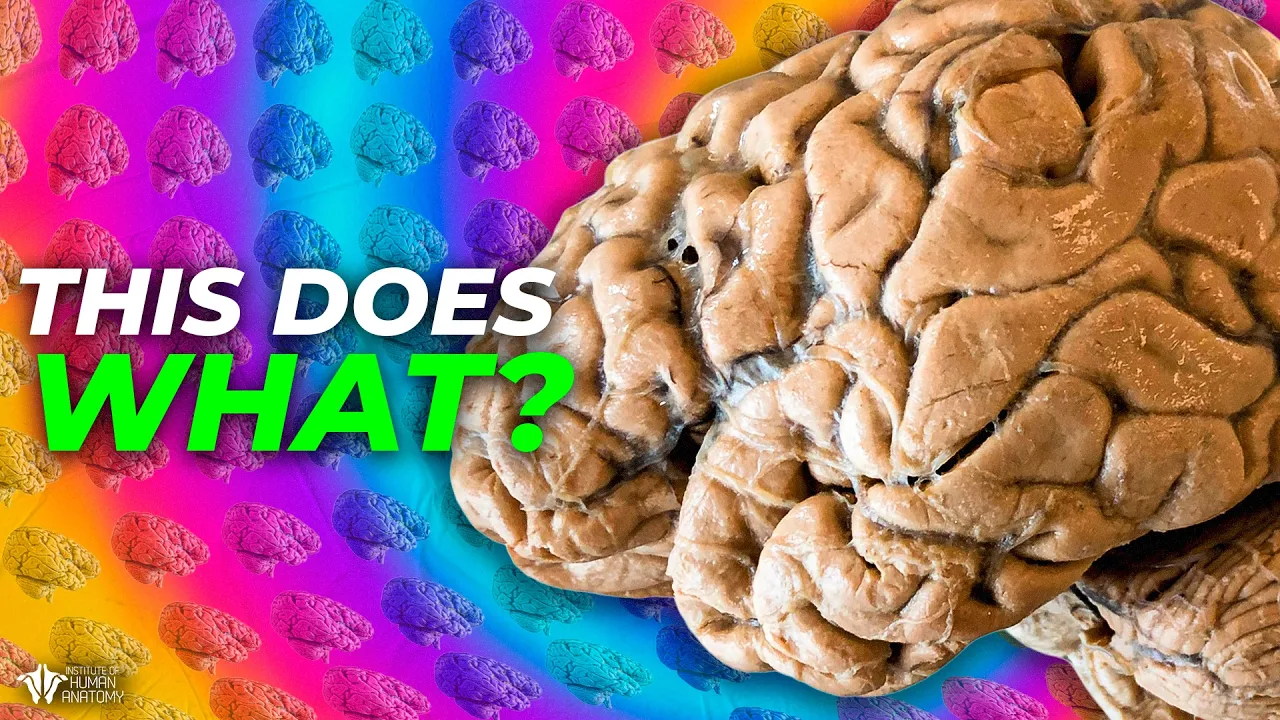
Inside the Brain: Why Microscopic Amounts of LSD Completely Alter Your Reality
 Institute of Human Anatomy
Jun 14, 2026 14:00
Create an account to hide videos, mark them watched, or save them to Don't Miss.
Create an account to hide videos, mark them watched, or save them to Don't Miss.
Create an account to hide videos, mark them watched, or save them to Don't Miss.
Chapters
Thanks to the sponsor of today's video, Hume. Use code: THEANATOMYLAB at https://humehealth.com//discount/THEANATOMYLAB?redirect=/pages/hume-body-pod&utm_source=youtube&utm_medium=influencer&utm_campaign=THEANATOMYLAB
-----
*Follow Us!*
https://beacons.ai/instituteofhumananatomy
🧠 * Ask AI Jonathan!*
https://www.instituteofhumananatomy.com/jonathan-ai
----
In this video, Jonathan from the Institute of Human Anatomy takes you inside the cerebral cortex using real human brain dissections to show exactly where psychedelic compounds bind. We trace how oral substances pass down the oral cavity, absorb into the small intestine, and filter through the liver before hitting systemic circulation to alter your perception of time, memory, and sense of self. You'll discover the precise role of the 5-HT2A serotonin receptors, see how the amygdala drives the thin physiological line between a "good trip" and a terrifying "bad trip," and learn what modern clinical research actually says about using controlled psychedelics to disrupt rigid patterns of depression, anxiety, and PTSD.
--
Table of Contents
----
Common Questions
How can a microscopic amount of LSD create such profound changes in the human brain? Doses of LSD are uniquely measured in micrograms (a millionth of a gram), making it incredibly potent. Because its molecular structure targets dense networks of 5-HT2A serotonin receptors in areas like the prefrontal cortex, a tiny fraction of a milligram can completely hijack higher-level cognition, sensory integration, and emotional processing.
What is synesthesia, and why does it happen during a psychedelic experience? Synesthesia is a structural blending of the senses where sounds may appear visual or colors acquire distinct emotional qualities. Neuroimaging research suggests it occurs because LSD temporarily removes the brain's internal filters, forcing compartmentalized brain networks to communicate with one another at highly unusual, intense levels.
What is "ego dissolution," and which brain structures are involved? Ego dissolution, or ego death, is the physiological loss of the normal boundary separating your physical self from the external world. It happens when the compound disrupts deep grounding networks across the cerebral cortex and hyper-activates the amygdala—the region responsible for fear, memory, and emotional salience.
Why are clinical researchers studying legal psychedelics for mental health? Modern clinical studies reveal that compounds like psilocybin and LSD can temporarily disrupt rigid, deeply reinforced neural patterns of thought and behavior. In a controlled environment, this temporary disruption allows patients to access and process trauma, depression, or addiction in ways that are normally blocked by their defensive cognitive architecture.
---
Music: https://www.bensound.com
License code: AUXISEQ0BQAQRBBW
---
#Neuroscience #BrainAnatomy #HumanPhysiology #SerotoninReceptors #InstituteOfHumanAnatomy #medicaleducation
Education
#Institute of Human Anatomy
#IOHA
#Jonathan Bennion
#LSD brain effects
#how acid affects the brain
#neuroscience of psychedelics
#5-HT2A serotonin receptor
#human brain dissection anatomy
#institute of human anatomy
#prefrontal cortex function
#synesthesia explained
#bad trip panic amygdala
#ego dissolution neuroscience
#small intestine drug absorption
#microdosing benefits reality
#clinical psychedelic research
#albert hoffman ergot fungus
#how does serotonin regulate mood