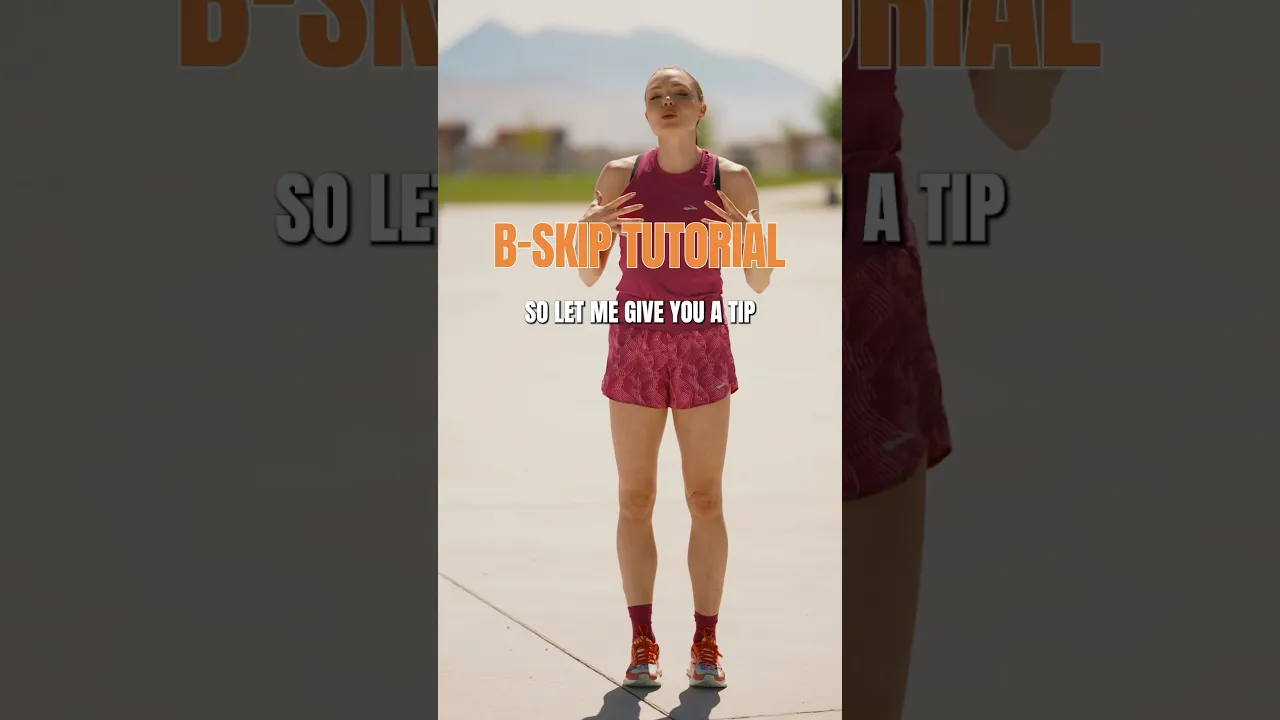
B-Skip Tutorial For Beginners
 Chari Hawkins
Dec 17, 2025 14:00
Create an account to hide videos, mark them watched, or save them to Don't Miss.
Create an account to hide videos, mark them watched, or save them to Don't Miss.
Create an account to hide videos, mark them watched, or save them to Don't Miss.
🏃 B-Skip Tutorial Breakdown
The B-skip is a dynamic drill that's excellent for improving running mechanics, coordination, and rhythm. It builds upon the A-skip by adding a leg extension and a powerful "pawing" action.
Here is the step-by-step breakdown of how to perform the B-skip, without the table format:
1. Starting Position & Posture
Stand Tall: Begin standing with your feet hip-distance apart. Keep your core engaged, shoulders relaxed, and look straight ahead.
Arm Action: Keep your arms bent at about 90 degrees, ready to swing in opposition to your legs (right arm swings with left leg, and vice-versa).
Foot Position: Maintain a dorsiflexed ankle (toes pulled up toward your shin) on the foot that will strike the ground.
2. The Movement Phases (Per Leg)
Knee Drive
Skip lightly off your support leg as you drive the opposite knee straight up to hip height. This part should feel similar to an A-Skip.
Focus/Cues: Like an A-Skip. Keep Hips Tall.
Extension/Kick
At the peak of the knee drive, slightly kick your lower leg out and forward. This should be a quick and controlled extension, not a full, locked-out kick.
Focus/Cues: Quick and Controlled. Avoid over-extending, which can stress the hamstring.
Paw-Back/Strike
Immediately after the slight extension, actively pull the foot down and back towards the ground beneath your center of mass. This is the "pawing" motion.
Focus/Cues: Strike Underneath You. Focus on grabbing the ground and pulling it back, mimicking the motion of a fast running stride.
Recovery
As the active leg strikes and pushes off, the opposite leg immediately begins its Knee Drive, continuing the cycle with a rhythmic 1-2, 1-2 cadence.
Focus/Cues: Maintain Rhythm and Balance.
3. Key Technique Tips
Rhythm: Think of it as a two-part movement: Up (Knee Drive/Extension) and Down (Paw-Back/Strike). Aim for a smooth, connected, and rhythmic motion.
Active Landing: Your foot should land quickly and actively underneath your body, pushing you forward, not out in front of you. This helps avoid "overstriding."
Coordination: Ensure your arms are coordinated with your legs—opposite arm and leg move together.
Keep it Compact: The extension should be quick and relatively compact, leading immediately into the powerful paw-back. @brooksrunning #brookspartner #letsrunthere #trackandfield
Entertainment