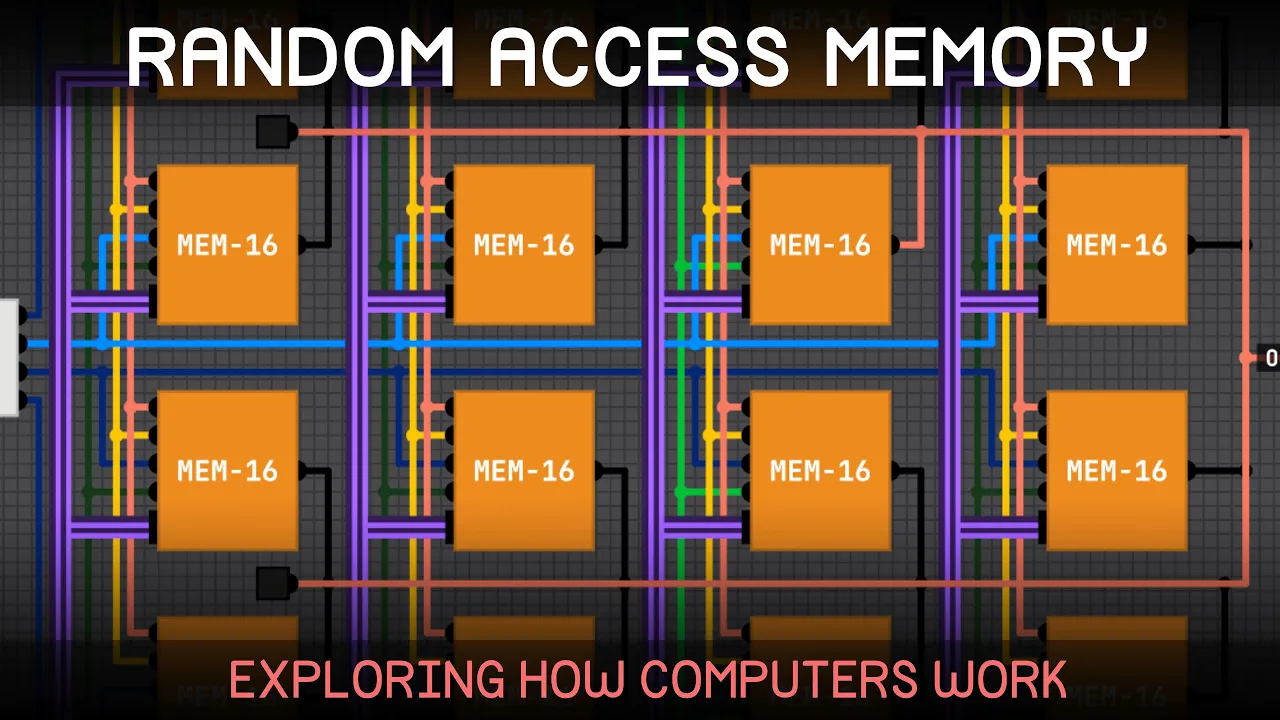
Simulating 256 Bytes of RAM
 Sebastian Lague
Apr 12, 2025 13:41
Create an account to hide videos, mark them watched, or save them to Don't Miss.
Create an account to hide videos, mark them watched, or save them to Don't Miss.
Create an account to hide videos, mark them watched, or save them to Don't Miss.
Chapters
Let’s try building a whopping 256 bytes of random access memory (inside a digital logic simulation).
This is part 5 of my journey to explore the basics of how computer’s work. If you’d like to watch the other episodes, you can find the full playlist here:
https://youtube.com/playlist?list=PLFt_AvWsXl0dPhqVsKt1Ni_46ARyiCGSq&si=tYFx249Y6Nufctdb
The simulation program is in a slightly rough and unstable state as I’m developing it as I go, but if you’d like to try it out, the latest version (and source code) is available over here:
https://sebastian.itch.io/digital-logic-sim
https://github.com/SebLague/Digital-Logic-Sim
If you’d like to support me in creating more videos, consider becoming a patron of the channel:
https://www.patreon.com/c/SebastianLague
This series was largely inspired by the 8-bit breadboard computer series by @BenEater (so be sure to check that out if you haven’t already)!
Image and music credits:
https://raw.githubusercontent.com/SebLague/Misc-Project-Info/refs/heads/main/Digital-Logic-Sim/ram-credits.txt
Chapters:
Entertainment