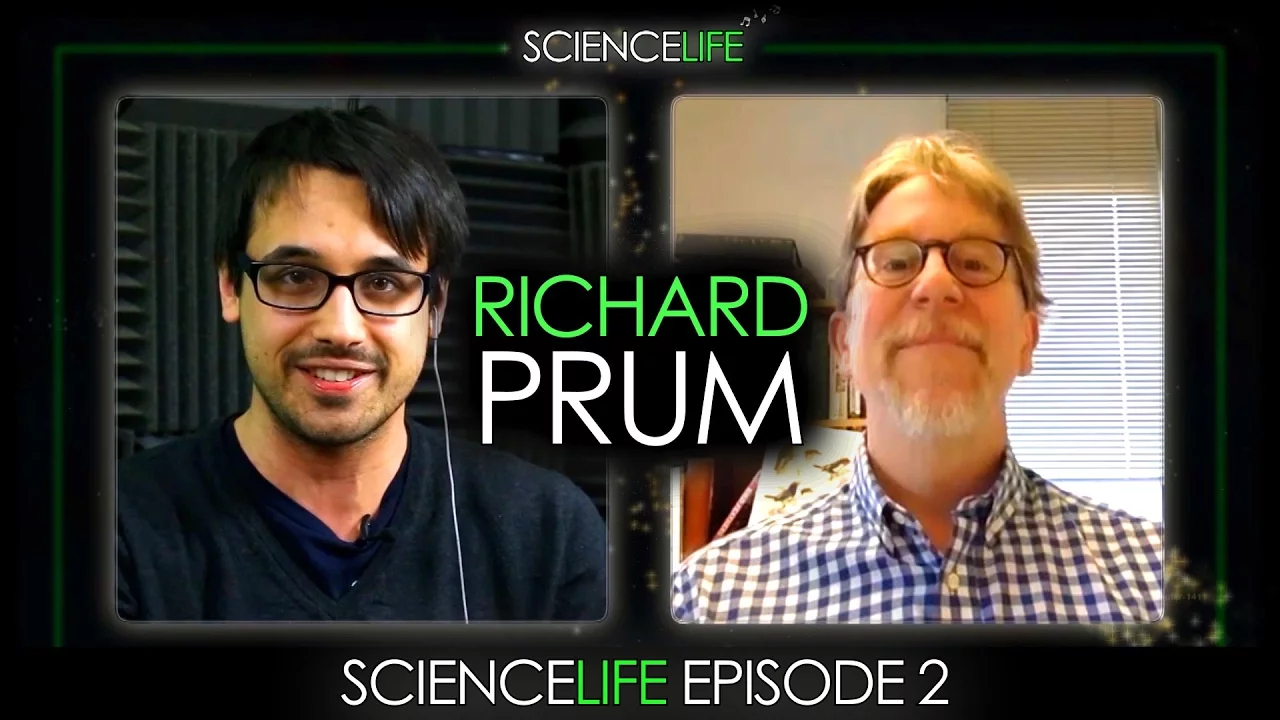
Richard Prum & Tim Blais: Dino Birds, Beauty and the Fitness of Free Choice | Science Life
 acapellascience
May 18, 2017 21:45
Create an account to hide videos, mark them watched, or save them to Don't Miss.
Create an account to hide videos, mark them watched, or save them to Don't Miss.
Create an account to hide videos, mark them watched, or save them to Don't Miss.
Tim sits down with Yale professor of ornithology Richard Prum!
"More Than Birds": https://www.youtube.com/watch?v=fWNJE6t6fZE
Science Life on iTunes: https://itunes.apple.com/ca/podcast/science-life/id1230957504
Subscribe: http://youtube.com/acapellascience
Science Life on Soundcloud: https://soundcloud.com/science-life-podcast
Support A Capella Science on Patreon: http://www.patreon.com/acapellascience
The second episode of Science Life is here, and the first remote one! I skyped with Yale professor of ornithology Richard Prum just before releasing my latest video, and it was a super cool conversation. Here we start off pondering why birds are so fascinating, and talking about the ways in which, weirdly, birds are more like people than a lot of mammals are. Then we get into the evidence for birds being the descendants of reptilian dinosaurs: Their bone structure, their mating habits, and the feathers that originated back before T-Rex. We also talk about how our understanding of oviraptor went from sneaky egg their to communally caring dad. Then we talk about how beauty emerges as a result of choices, both in birds and in flowers. Then we get into the tubular evolution of feathers, before returning to choice in the form of the sometimes-disturbing sexual practices of ducks and and the more cultured bowerbird dating scene.
Finally, we get into how a young person might become part of the next generation of great ornithologists, why minds matter in evolution, and why some dissident and reckless voices in science are crucial to its survival!
More Richard Prum: https://www.youtube.com/watch?v=Ao7Q8kOqjfs
Science & Technology